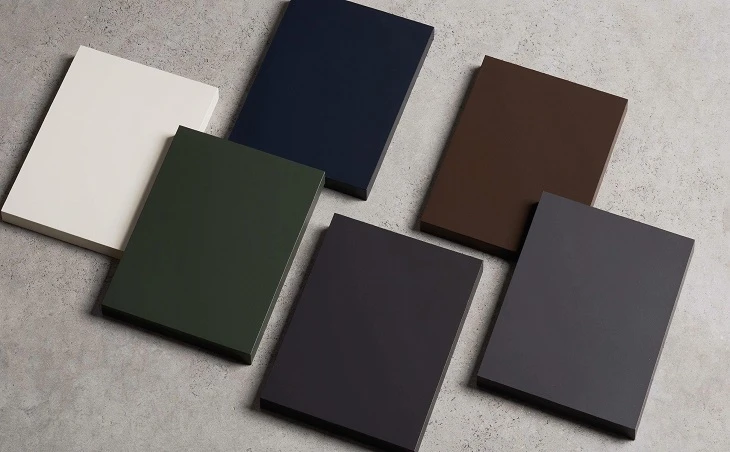
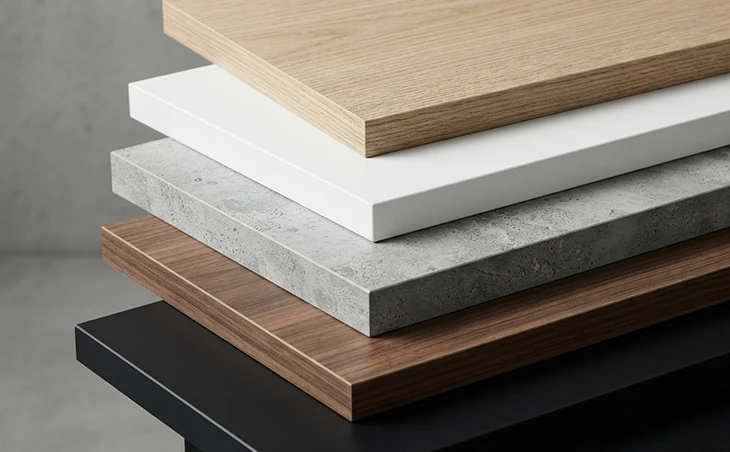
If you are buying decorative panels in the UK, the Middle East or Commonwealth markets, the phrase you will hear most on a factory floor is MFC — melamine faced chipboard. The same product reaches North American buyers as melamine particle board or a 4×8 sheet of TFL. It is one of the most widely traded furniture materials on earth, and also one of the most casually specified, which is where most problems start.
This guide is written for buyers who are tired of treating "melamine chipboard" as a single, generic product. It explains what sits behind the name, where the material genuinely earns its place in a build, where it does not, and how to write a purchase order that survives a container program.
Ask ten cabinetmakers what the best plywood for cabinets is and you will get ten confident answers — followed by a bill of materials showing that half the cabinet is not plywood at all. The question hides an assumption that no longer matches how most kitchens are built.
Walk through cabinet showrooms in Milan, Munich or Seoul and the majority of slab doors sit at the low-gloss end of the spectrum. Matte finishes stopped being a trend around five years ago. They are now the default surface in mid-to-premium furniture programs, which is why every supplier offers something called "ultra matte" or "super matte" — and why the labels have become almost meaningless.
Every decorative panel you purchase is a two-part system: a decorative facing laminated onto a structural core. The facing dictates the aesthetic. The substrate dictates the panel's weight, screw-holding capacity, moisture behavior, edge quality, and ultimately your unit cost.
The terminology around furniture materials is notoriously messy. Mention "PET" to a layman, and they think of plastic water bottles. Mention it to an acoustic designer, and they picture sound-absorbing felt panels made from recycled polyester fibers.
Ask any cabinet maker or furniture importer to define their core material, and the conversation inevitably starts with melamine. Despite its ubiquity in the trade, there is still widespread confusion among buyers regarding specifications, grading, and performance limitations.

 13, Oct. 2026