Panels are sold by their faces and replaced by their edges. A good melamine panels program can last fifteen years; the edge often decides whether it does. Yet edge banding tape is the most under-specified component in most projects — chosen from a color chart, ordered separately, discussed only when something visibly fails.
Every week, importers ask Chinese wall panel manufacturers the same three questions: price, MOQ and lead time. And every month, some containers arrive with a problem those questions could never prevent. The boards are not broken. They are the wrong shade of grey.
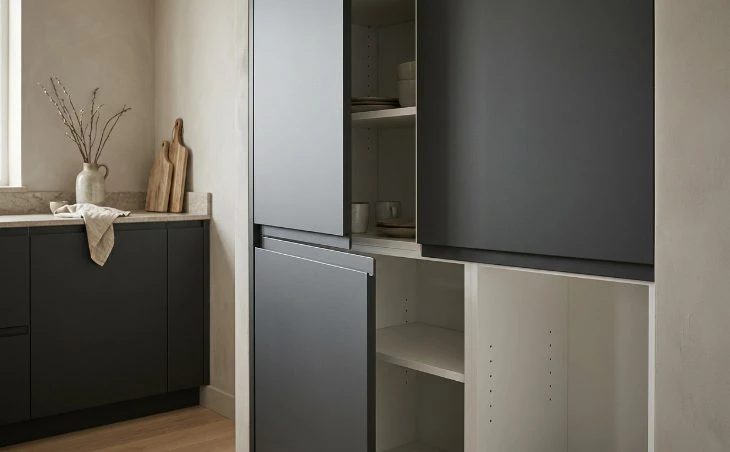
"Melamine vs MDF" is one of the most searched comparison queries in furniture materials — and the comparison itself does not exist. It is like asking "paint versus drywall" or "upholstery versus chair frame." MDF is a board. Melamine is a surface.
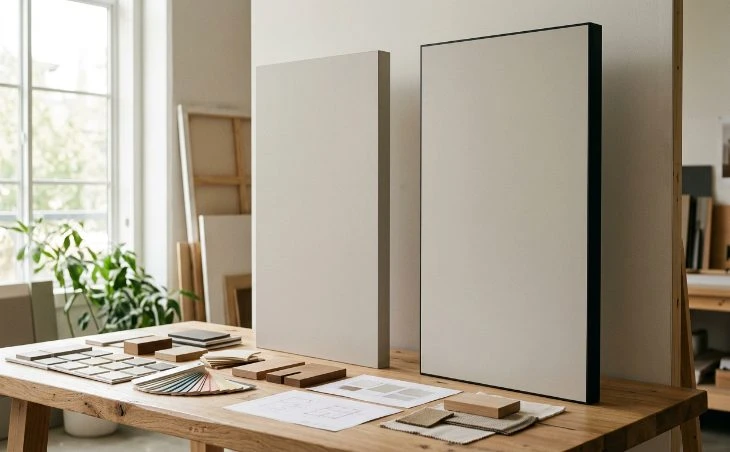
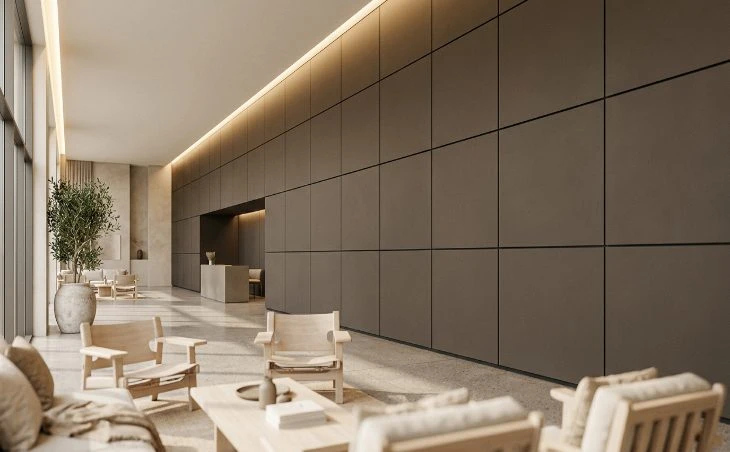
Walk into any materials library and search "interior wall panels," and you get two completely different shelves. One holds finished wall paneling — boxed plank systems, clip-on slat packs, branded accent wall kits aimed at contractors. The other holds panel material: 1220 × 2440 mm sheets that a fabricator cuts, edges and assembles into whatever wall system the drawing requires. This guide is written for designers who need to understand both, because the material decision drives the finished look either way.
Walk through a furniture plant and the board under the saw is usually the one least discussed in the showroom: MDF. Consumers see "cheap compressed sawdust." Plant managers know it as the most predictable substrate on the floor — the core behind nearly every painted profile door, every high-gloss and ultra-matte front, and most mouldings a cabinet line touches.
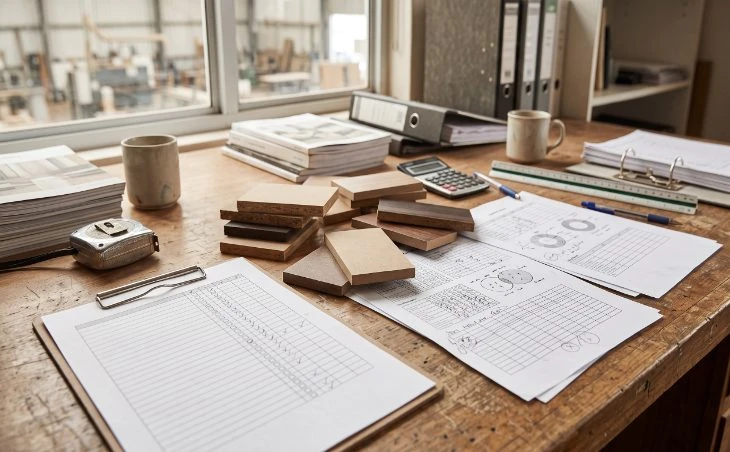
Two containers of "BB/CC, 18 mm, 4×8 plywood" can leave the same port and deliver two different materials. One measures 17.6 mm in the middle of the sheet, with patched faces acceptable only under opaque lamination. The other reads 18.1 mm, with faces clean enough for a clear varnish. The purchase description was identical. The specification was not.
 27, Oct. 2026