Foshan Panels New Materials — source manufacturer of eco-friendly decorative panels. Browse answers to common questions about products, customization, shipping and support, or reach out to our team for personalized assistance.
Each substrate serves different needs. MDF vs particle board — MDF has a smoother, denser surface ideal for painted or profiled edges, while particle board (chipboard) is lighter and more economical for flat-pack furniture. Plywood offers superior screw-holding and moisture resistance for kitchen and bathroom cabinets. OSB vs plywood — OSB provides high structural strength at a lower cost and is increasingly used for furniture and decorative applications. We offer all four substrates across our PET and melamine lines.
What is melamine? It is a resin-impregnated decorative paper fused directly onto MDF, plywood, particle board or OSB under heat and pressure, creating a hard, scratch- and heat-resistant surface. High-pressure laminate (HPL) is a thicker, multi-layer sheet glued to the board afterwards — slightly more impact-resistant but typically more expensive. For most furniture and cabinet applications, melamine faced panels deliver the best performance-to-cost ratio.
Both deliver mirror-like gloss, but PET panels are more flexible, impact-resistant and less prone to cracking or delamination than acrylic decorative panels. PET is also lighter, free of plasticizers and heavy metals, and generally more cost-effective for large-scale furniture production, while acrylic offers a slightly deeper gloss at a higher price point — making PET the preferred choice for most B2B furniture programs.
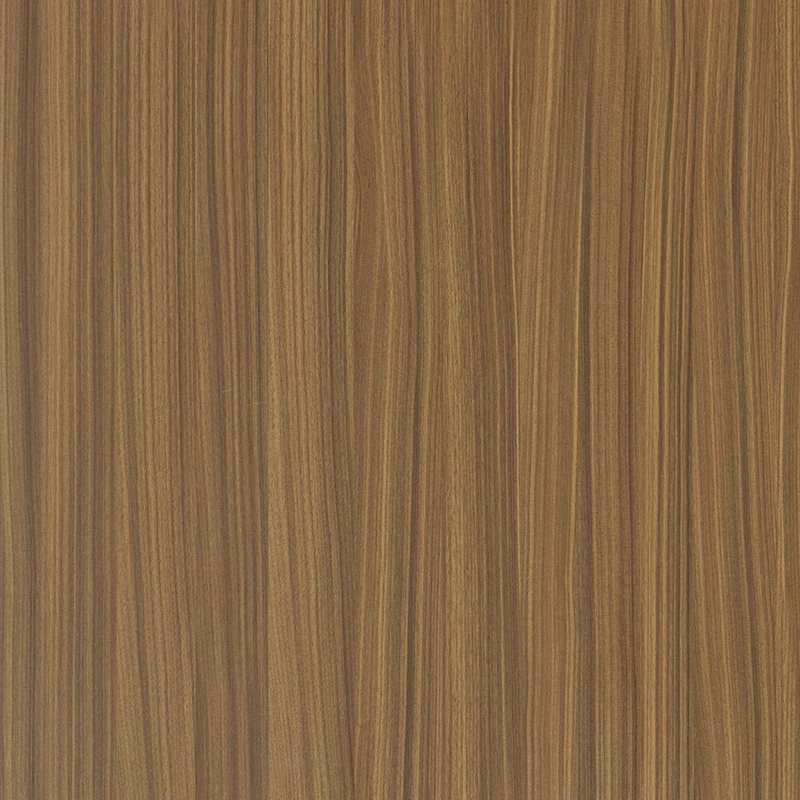
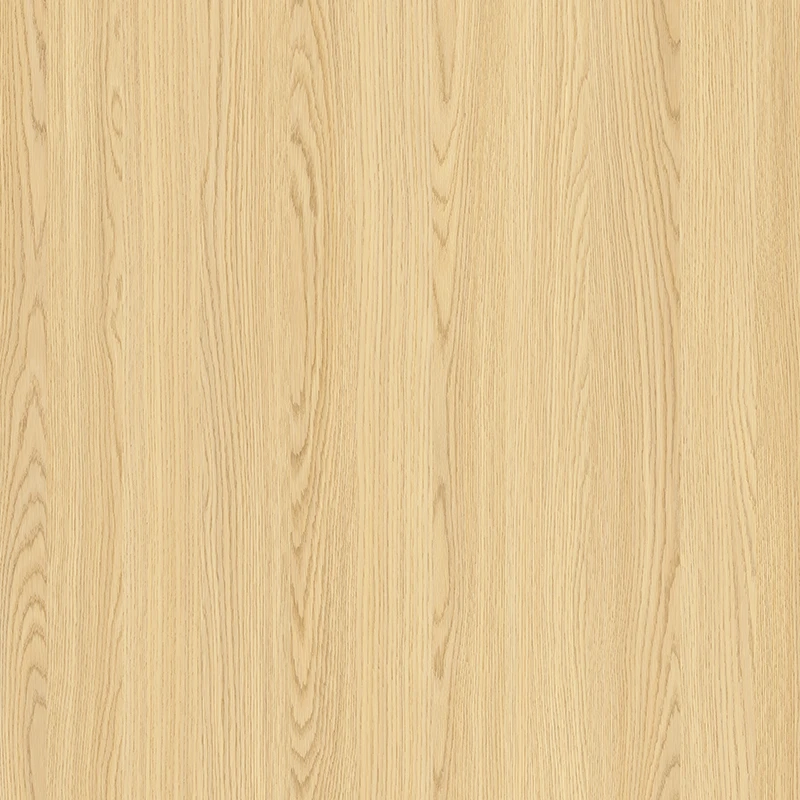
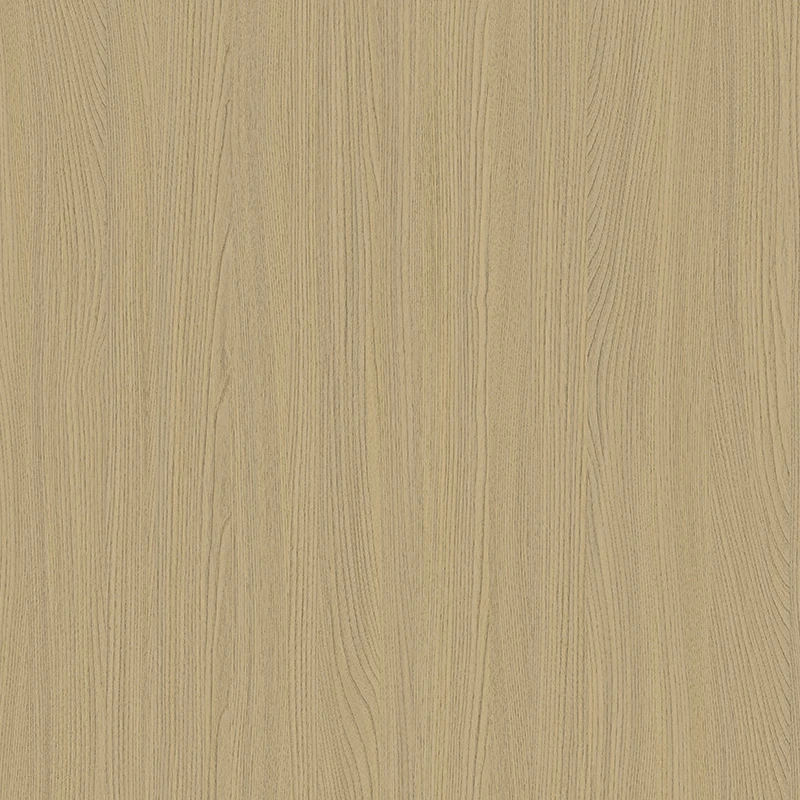
Standard panel sizes are 1220×2440 mm (4×8 melamine board) and 1220×2745 mm, with thicknesses of 9/12/18/22 mm (OSB also available in 25 mm). Finishes include high gloss, ultra matte / super matte, soft-touch, brushed metallic, wood grain, leather, fabric, stone, weave and art texture — over 100 designs across 8 finish families. Single-sided and double-sided lamination are both supported.
The melamine surface itself is water- and stain-resistant, so it is widely used for kitchen cabinets and bathroom vanities. However, the exposed core and cut edges are not fully waterproof. For high-humidity environments we recommend moisture-resistant plywood as the substrate, sealed cut edges and matching laser edge banding for an invisible, zero-joint finish.
All our panels meet Chinese ENF and E0 standards (formaldehyde emission ≤0.025 mg/m³), among the strictest in the world. We are also certified by FSC, CARB Phase 2 and CE, and our PET film is REACH-compliant — making our boards suitable for bedrooms, children's furniture, healthcare projects and direct export to the US, EU and other regulated markets.
ABS edge banding is durable, impact-resistant and widely used for standard furniture. PVC edge banding is flexible, economical and available in a very wide color range. Laser edge banding uses a laser-activated polymer layer instead of hot-melt glue, producing an invisible, glue-free zero-joint with superior heat and moisture resistance — the premium choice for high-end cabinet doors and visible furniture edges. All three are color-matched to our panel collections.