 31, Aug. 2026
The terminology around furniture materials is notoriously messy. Mention "PET" to a layman, and they think of plastic water bottles. Mention it to an acoustic designer, and they picture sound-absorbing felt panels made from recycled polyester fibers.
In the decorative panel and cabinet manufacturing industry, PET means something entirely different. PET laminated panels are wood-based boards faced with a thin layer of polyethylene terephthalate film. Over the past five years, this material has aggressively captured the mid-to-high-end kitchen and wardrobe market, effectively displacing older foil technologies.
This guide breaks down how these laminated panels are manufactured, where they outperform competing surfaces, and exactly what to look for when sourcing them for large-scale fabrication.

A high-quality PET board is a composite product relying on precise flat lamination. The surface layer is a specialized PET film, typically extruded in thicknesses ranging from 0.3mm to 0.8mm. The film is bonded to a rigid substrate—most commonly MDF, particleboard, or plywood.
The critical variable in this layup is the adhesive. Premium PET laminated panels are manufactured on automated flat lamination lines utilizing PUR (polyurethane reactive) hot-melt adhesive. Unlike older water-based glues or EVA hot-melts, PUR undergoes a chemical cross-linking process when exposed to ambient moisture. Once cured, the bond is irreversible, highly water-resistant, and stands up to kitchen heat far better than EVA hot-melt lines.
Because the PET film itself contains zero formaldehyde, the facing layer is chemically stable and environmentally clean. Modern lamination lines run double-sided in a single pass, ensuring the board remains balanced to prevent warping after it is cut.
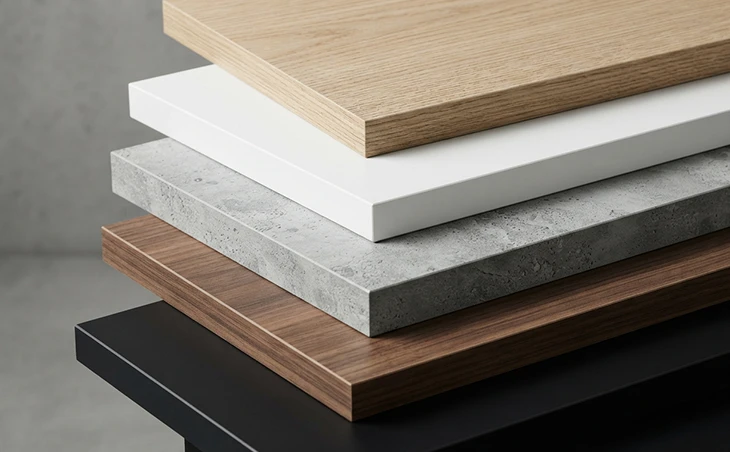
The aesthetic flexibility of PET film has expanded rapidly. Production runs today generally fall into six distinct finish categories:
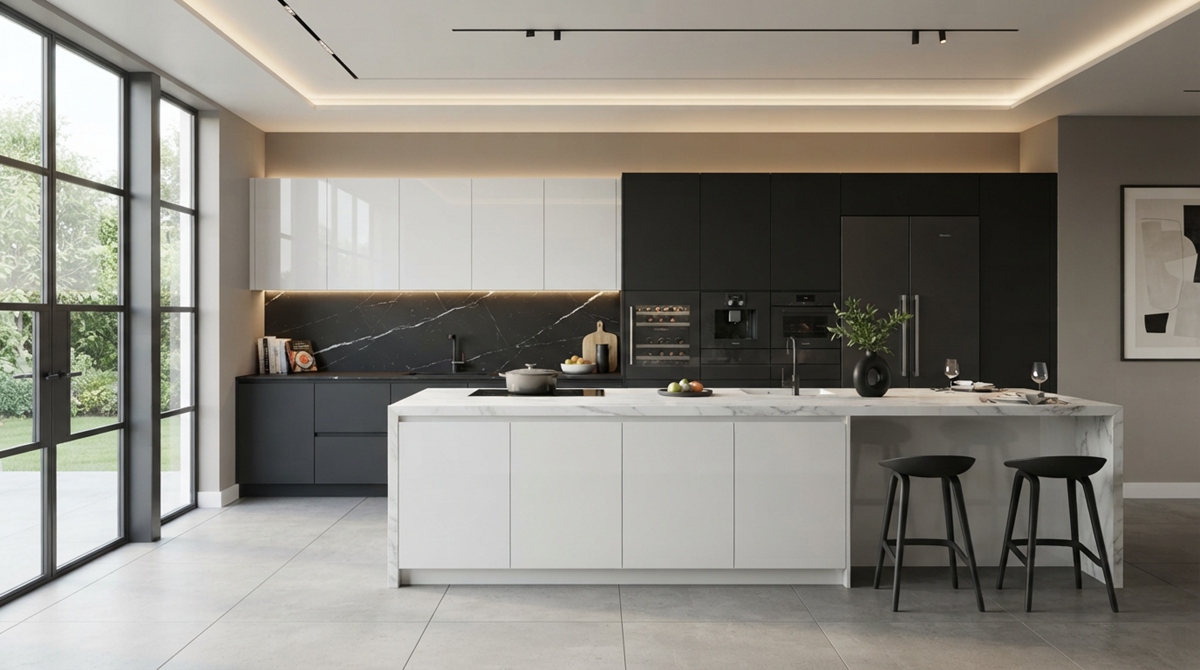
Super Matte: The unquestionable heavy hitter of the group. Super matte films undergo a specialized curing process to achieve an ultra-low gloss level, frequently measuring between 0–10 GU (gloss units) at a 60-degree angle. This tier features an anti-fingerprint coating and a signature soft-touch, velvety tactile feel. Matt MDF boards with this face dominate premium modern kitchen designs.
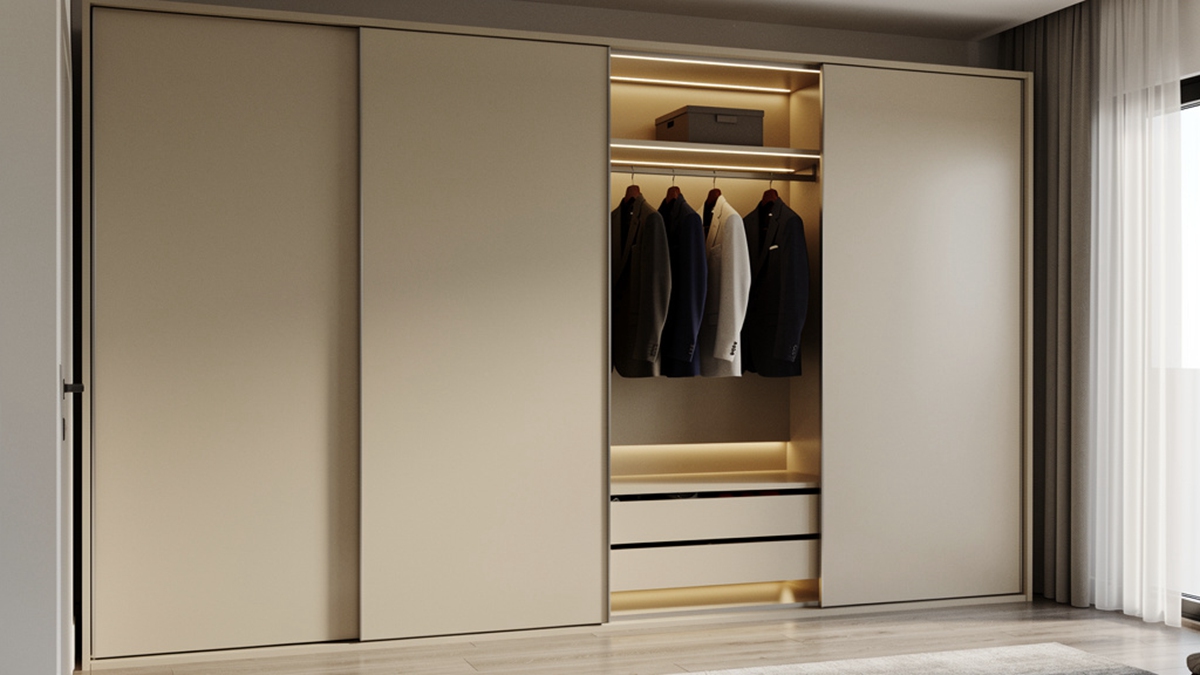
Skin Matte: Positioned as an economical alternative to super matte. It carries a lower price point and a slightly less pronounced soft-touch effect, but still delivers a flat, non-reflective aesthetic suitable for large wardrobe runs.
High Gloss: Delivering mirror-like depth without the distortion typical of cheap foils. A high gloss white MDF panel faced with PET easily hits 90+ GU, offering a smooth, ripple-free reflection that interior designers leverage to visually expand small spaces.
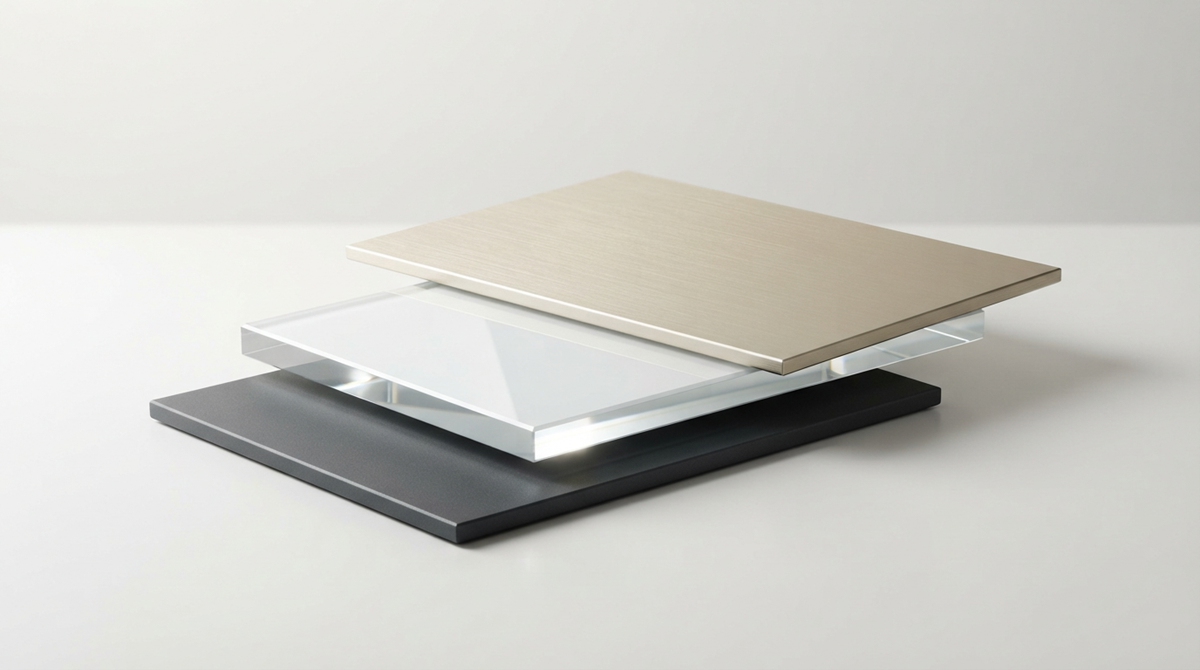
Metallic: Solid colors infused with metallic pigments during the extrusion process. The result mimics anodized metals without the prohibitive weight or cost of actual aluminum sheeting.
Brushed Metal: Designed specifically to replicate brushed stainless steel or aluminum. This finish is highly popular for kitchen accent panels, plinths, and modern commercial casework.
Textured: Featuring embossed tactile surfaces. While less common than the matte and gloss variants, textured PET is gaining traction for specific architectural wall cladding and hotel furniture.
Fabricators and brands did not pivot to PET out of goodwill; they did it because the material solved chronic issues with older surfaces.
The primary driver is the anti-fingerprint performance on matte faces. Dark matte kitchens look incredible in showrooms but historically showed every oily handprint in a real home. Premium PET films carry an oleophobic, fluoropolymer-based topcoat that drastically lowers the film's surface energy. On an untreated matte face, skin oils spread into the microscopic valleys of the texture and flatten them — turning that spot glossy and showing a clear print. On a quality anti-fingerprint surface, the oils bead up instead of wetting the face, the light-scattering texture stays intact, and the print becomes nearly invisible. What little residue remains wipes off with a dry cloth.
Fabricators also value the solid coloration of the film. The color runs homogeneously throughout the 0.3mm–0.8mm thickness of the material. When a CNC router cuts a profile or a 45-degree bevel for a handleless door, the edge remains color-matched. You do not expose an ugly white baseline, which is a common failure point with cheaper printed PVC foils.
If a supplier treats PET as a miracle material that fits every application, they are misinformed. It has objective limitations.
First, PET costs more than standard thermally fused melamine. It belongs on premium visible surfaces—kitchen doors, drawer fronts, island backs, and end panels. Using it for hidden cabinet carcasses is a waste of money.
Second, if a catalog shows you highly realistic oak or walnut woodgrain PET panels, look twice. PET’s true manufacturing strength lies in solid colors, matte finishes, and metallic effects. Realistic wood grain, stone, and fabric patterns remain the undisputed domain of melamine paper and HPL (high-pressure laminate). Most successful PET programs are dominated by solids. Pretending the material competes in the woodgrain space just misleads buyers.
Finally, this is strictly a flat-laminated product. The film cannot be vacuum-pressed or membrane-pressed over 3D routed MDF profiles like a traditional vinyl foil. Because it is a flat laminate board, edges must be sealed. This requires color-matched edge banding tape (typically ABS or PVC), ideally applied via PUR edgebanders or laser edge banding technology for a seamless, zero-joint aesthetic.
Evaluating board materials means understanding where each sits in the pricing and performance hierarchy.
Melamine vs Laminate (PET)
This is a classic value-engineering discussion. Melamine (TFL) and PET serve different structural jobs and price tiers. TFL is your workhorse. It is highly scratch-resistant, inexpensive, and handles woodgrain textures flawlessly. Consequently, TFL is the industry standard for cabinet carcasses, shelving, and volume commercial furniture.
PET is the premium aesthetic face. A standard high-end European-style kitchen specification will almost always combine melamine and laminate: a durable, cost-effective E0 melamine carcass paired with super matte or high gloss PET doors.
PET vs Acrylic Decorative Panels
When buyers want extreme high gloss, the choice usually narrows down to PET or acrylic. Genuine acrylic panels reach a slightly deeper, more jewel-like gloss than PET. However, acrylic is notoriously brittle. It is prone to micro-scratching during routine cleaning and often splinters during CNC cutting if feed speeds are not perfectly dialed in. Acrylic is also significantly more expensive. PET offers a more forgiving fabrication process, superior impact resistance, and a better price-to-performance ratio for large-scale residential projects.
A premium film requires a flawless foundation. The core board dictates the overall stability and visual quality of the finished panel.
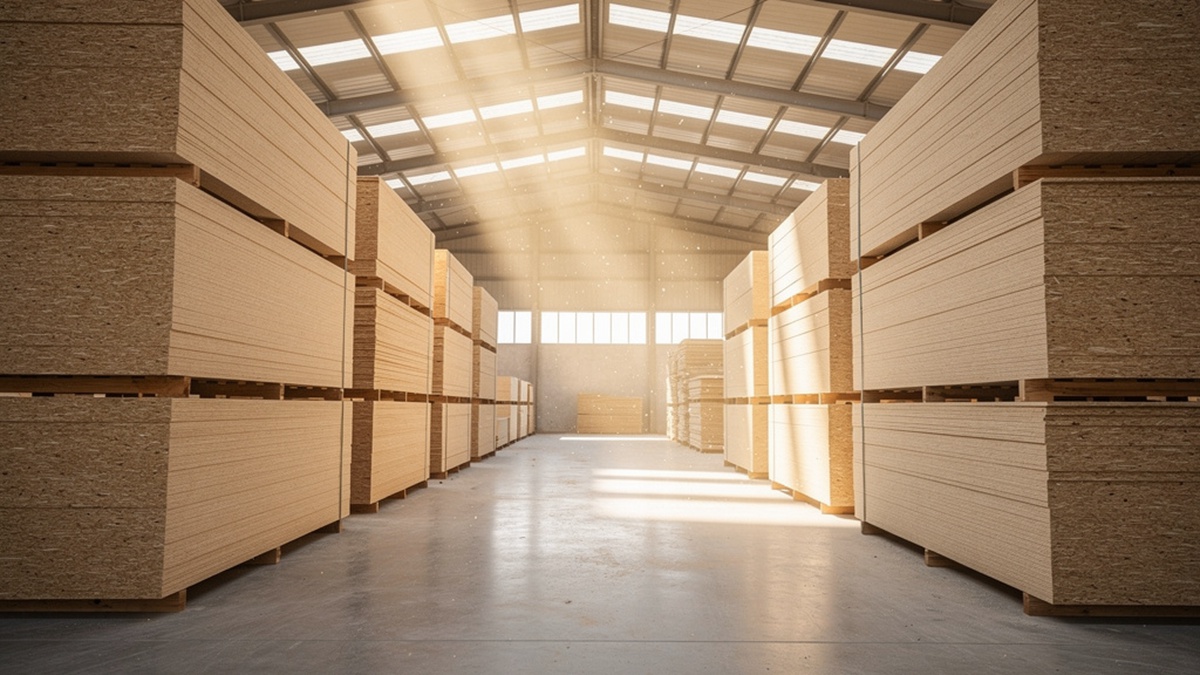
MDF core is the unquestioned industry standard for high gloss and super matte faces. MDF features a tight, uniform surface density. This prevents "telegraphing"—the phenomenon where core imperfections, loose wood chips, or sanding marks show through a glossy film and ruin the mirror effect.
Particleboard core is heavily utilized for more aggressive cost lines, particularly in wardrobe doors. Modern fine-surface particleboard has improved drastically, but you still risk slight surface deviations compared to MDF.
Plywood core is reserved almost exclusively for moisture-prone export markets, particularly the US East Coast, the UK, and Southeast Asia. While plywood offers unmatched water resistance and screw-holding strength, its natural veneer variations make it the hardest substrate to keep perfectly flat under a high gloss film.
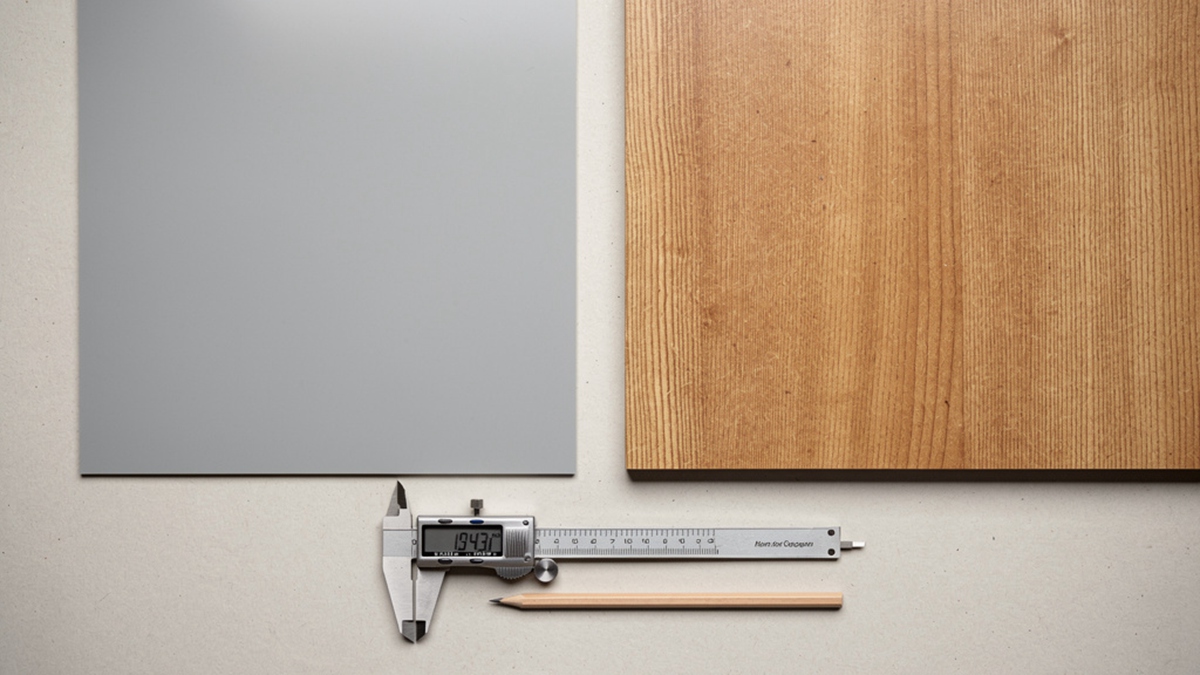
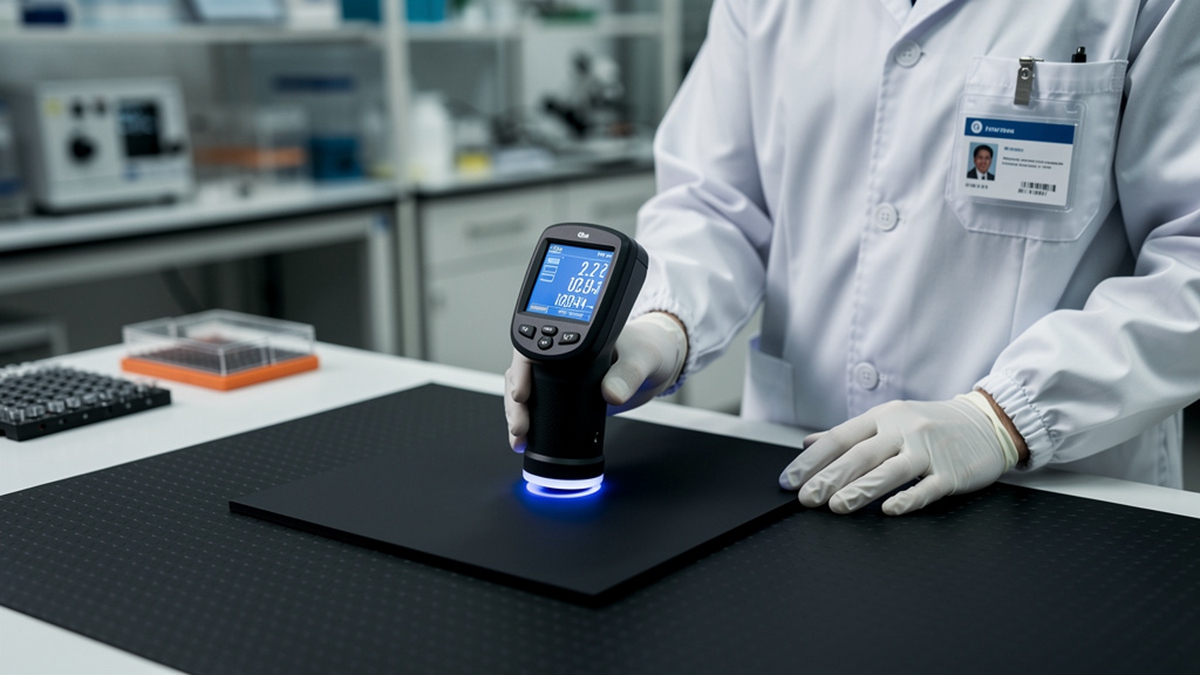
Evaluating a new supplier based on a 50x50mm swatch card is dangerous. You cannot test machinability or core stability on a swatch. Always demand actual production board samples measuring at least 300x300mm, and run them through this seven-point checklist:
1. Gloss Meter Test: Verify the gloss units match the declared technical data sheet. A super matte sample should consistently read below 10 GU across the entire face.
2. Oil Wipe Test: Rub a greasy thumb heavily onto a super matte sample. Wipe it with a dry microfiber cloth. The residue should lift immediately without smudging across the board.
3. Scratch Test: Run a fingernail or the edge of a coin over the surface using standard pressure. True PET has a hard topcoat that resists blunt scratching far better than cheap PVC.
4. Edge Cut Test: Cross-cut the sample on a panel saw, then route a 45-degree bevel. Check the bond strength of the PUR glue line. You should not be able to easily peel the film back from the core, and the bevel should reveal no white baseline.
5. Diagonal Sighting: Hold the panel at a sharp diagonal angle against a bright overhead light. Look for "orange peel" texture on gloss finishes or core telegraphing on matte finishes.
6. Thickness Verification: Request the technical data on the film thickness. A supplier claiming a premium 0.5mm or 0.8mm film can easily substitute a 0.3mm film to cut costs.
7. Batch Consistency: If possible, request samples from two different production runs of the same color to check for metamerism or color drift.
The global standard sheet size for these laminated panels is 1220×2440mm (4×8 ft), though oversized boards like 1220×2745mm (4×9 ft) are increasingly common for floor-to-ceiling wardrobe doors.
Finished board thicknesses typically sit at 18mm or 19mm for door applications. Panel importers generally buy full master boards to process in-house on CNC nesting machines. Alternatively, many brand buyers bypass raw board imports altogether, opting to source fully finished, cut-to-size door components with laser edge banding already applied by the Chinese mill.
From a regulatory standpoint, the PET facing is zero-emission. The panel's environmental certification depends entirely on the core board. Chinese mills typically stock ENF, E0, or E1 grade cores for domestic and Asian markets. For North American buyers, the core must explicitly meet CARB P2 or TSCA Title VI compliance. European importers require E1 or CE marking. FSC-certified substrates are available upon request from major manufacturers, though they require longer lead times and carry a distinct price premium.
Sourcing from overseas flat lamination lines requires strict parameter control to avoid catastrophic claims.
Clarify immediately during the RFQ stage which of the six finishes are stocked, high-volume production items versus custom runs. Standard super matte solids usually have low minimum order quantities (MOQs), while custom metallic extrusions may require you to buy thousands of meters of film.
Ask the manufacturer how they handle edge tape. Do they extrude their own color-matched edge banding in-house, or do they rely on third-party tape suppliers? Color drift between the board face and the edge tape is a massive headache in this category; vertically integrated factories control this better.
Finally, do not leave the technical specifications vague. Lock your exact PET film thickness, the specific brand of PUR adhesive used on the line (such as Kleiberit or Henkel), and the acceptable GU range directly into your purchase order.