 24, Aug. 2026
Ask any cabinet maker or furniture importer to define their core material, and the conversation inevitably starts with melamine. Despite its ubiquity in the trade, there is still widespread confusion among buyers regarding specifications, grading, and performance limitations.
If you are sourcing panel products for a large-scale project, establishing a retail furniture line, or importing containers of raw board, operating on vague assumptions is a fast track to rejected shipments. This guide breaks down exactly what you are buying, how it is made, and how to verify its quality before authorizing production.
To answer the fundamental question—what is melamine board—we have to look at the chemistry and the construction. At its core, it is a structural wood-based substrate covered on one or both sides by décor paper that has been saturated with melamine-formaldehyde resin and cured under high heat.
A critical point of clarification for buyers fielding safety questions from end-users: the melamine in decorative panels is a fully cured, inert thermosetting plastic. Once processed, it is entirely stable. It has absolutely zero connection to the food-additive safety scandals that made headlines years ago. When buyers ask "what are melamine boards made of," they are asking about a highly durable, chemically stable surface engineered for everyday interior use.
In technical industry terms, melamine faced board is classified as Thermally Fused Laminate (TFL) or Low-Pressure Laminate (LPL).
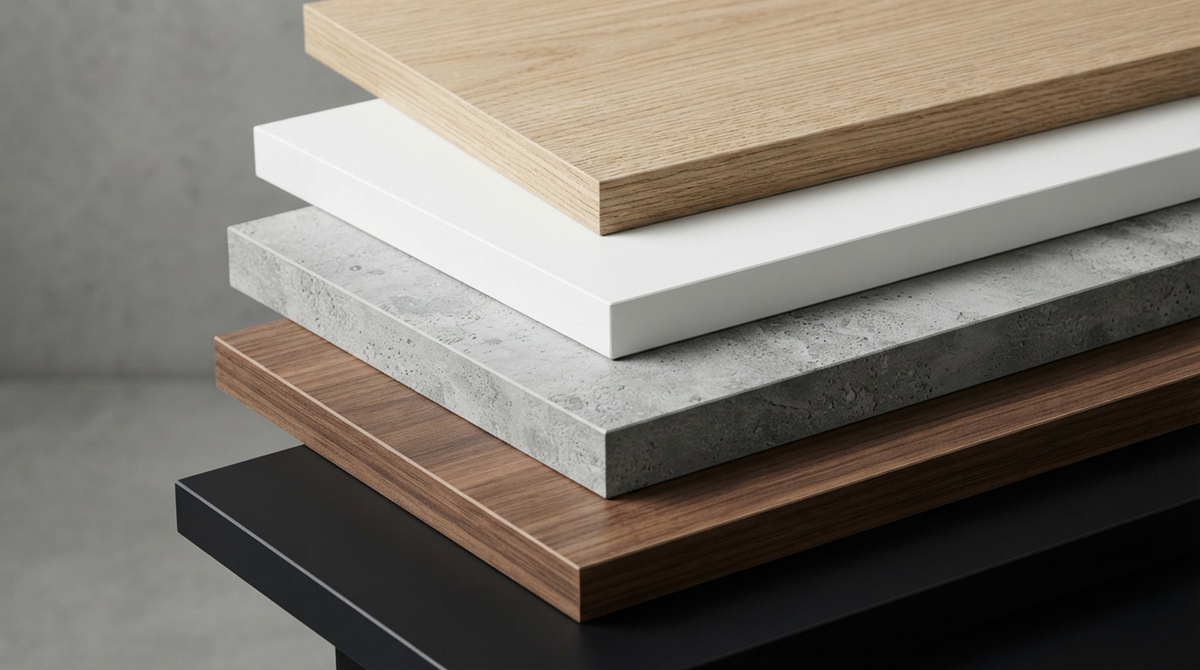
Understanding the manufacturing process is crucial for knowing where to deploy these materials.
Melamine boards are produced in a short-cycle lamination press. The resin-impregnated décor paper is placed directly onto the raw substrate. The press applies heat (typically 180–200°C) and pressure for 30 to 40 seconds. Under this heat, the resin melts, flows into the porous surface of the wood board, and cross-links. The result is a permanently bonded surface with no separate glue line.
This process differs entirely from High-Pressure Laminate (HPL). HPL consists of multiple layers of kraft paper saturated with phenolic resin, topped with a melamine-impregnated décor layer, and pressed under massive pressure into a standalone sheet. That sheet must then be bonded to a substrate using a separate contact adhesive or PVA glue. HPL is significantly thicker, costs substantially more, and is engineered for severe horizontal abuse. TFL is designed for efficiency, delivering excellent vertical and light horizontal wear at a fraction of the cost.
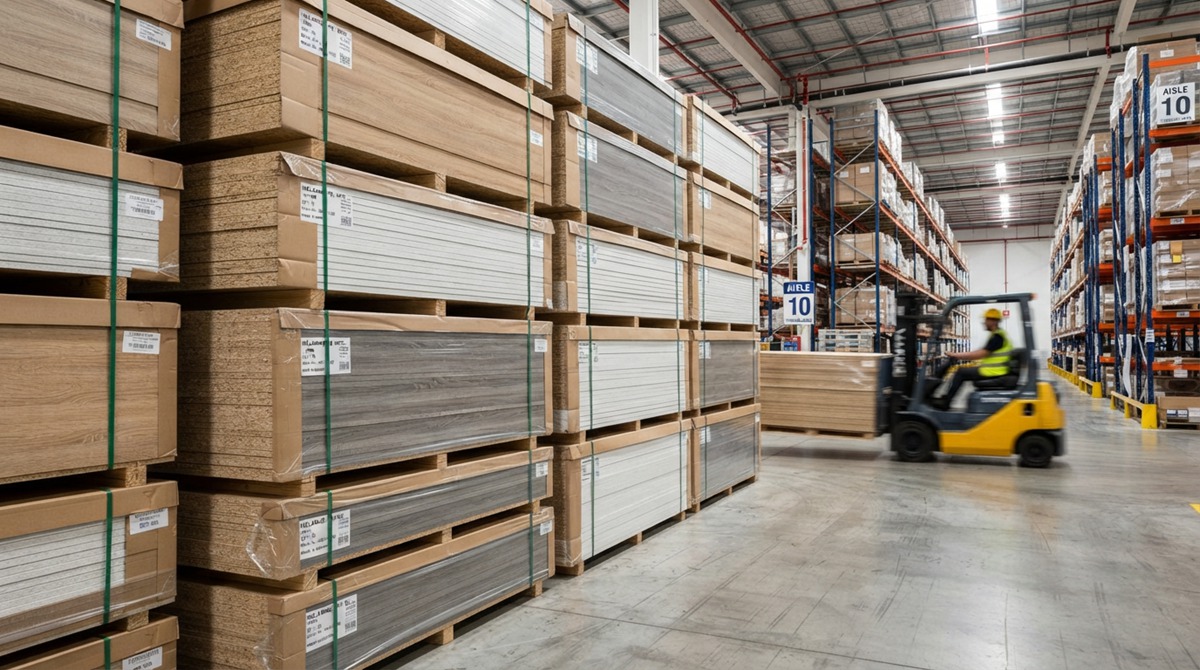
Specifying "melamine board" on a purchase order is incomplete. The surface is just the skin; the substrate determines the structural integrity, machining behavior, and cost. You must specify the core material.
Particleboard / Chipboard
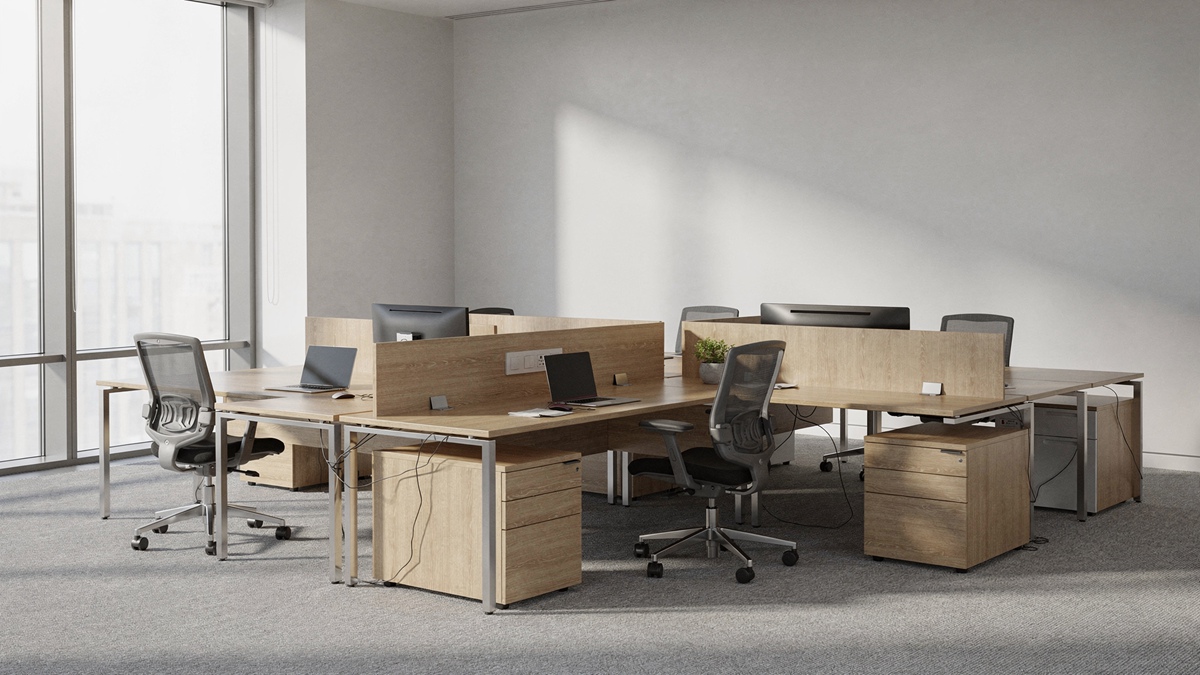
This is the undeniable workhorse of the global furniture industry. Melamine faced chipboard (MFC) is manufactured by pressing wood chips and resin into a dense core. It is highly cost-effective, dimensionally stable, and relatively lightweight. MFC is the standard choice for interior cabinet carcasses, wardrobe bodies, and standard office desking.
Medium-Density Fiberboard (MDF)
MDF is produced from fine wood fibers rather than chips. It is heavier, denser, and machines exceptionally well. If your design calls for complex routing, clean edge profiling or precise hinge boring without breakout, MDF is the better core. For hinges in 18mm door edges, use threaded inserts for reliable long-term grip.
Plywood Core
Plywood offers the highest strength-to-weight ratio and superior moisture resistance compared to particleboard or MDF. Melamine laminated onto a calibrated plywood core commands a premium price. It is heavily favored in North American markets for high-end kitchen sink bases, bathroom vanities, and commercial wet-area cabinetry.
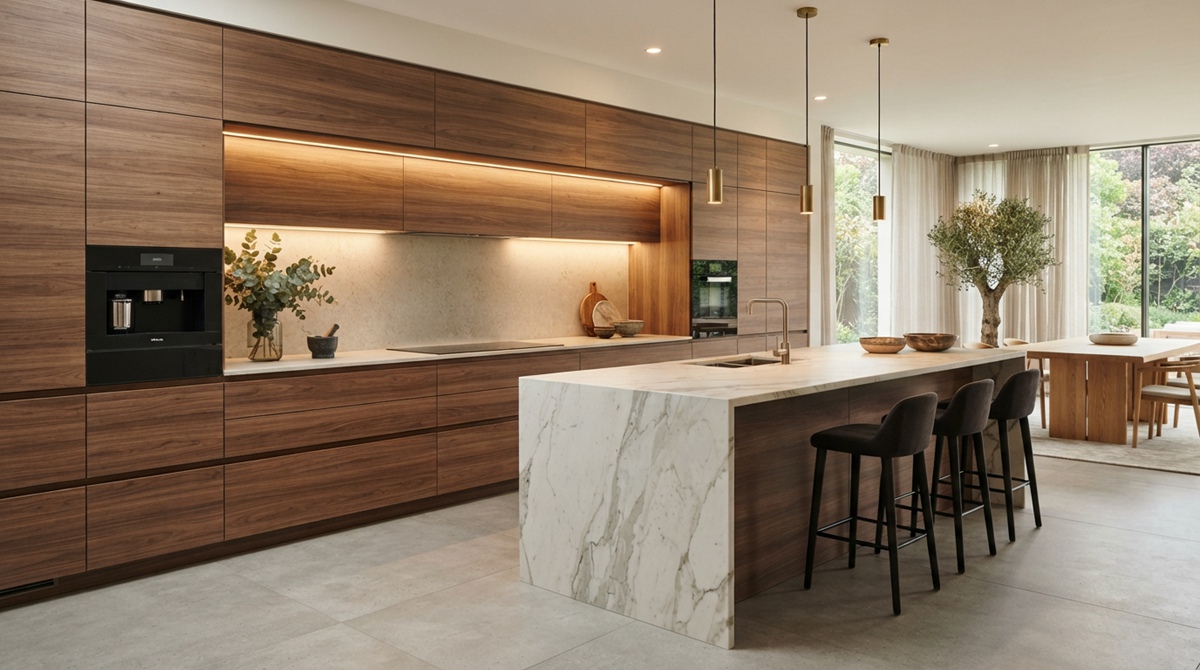
The visual quality of melamine sheets has advanced drastically over the last decade. Early iterations were easily identified as fake wood, but modern printing and pressing technologies have closed the gap.
Factories now offer an immense range of finishes. Solid colors dominate the volume orders—white melamine board remains the undisputed king of kitchen cabinet interiors and closet systems. Beyond solids, current trends favor super-matte finishes, realistic stone and cement replicas, and tactile textile prints that mimic linen or leather.
The most significant advancement is Embossed-in-Register (EIR) technology. In EIR production, the steel press plate features a 3D texture that perfectly aligns with the printed wood grain on the décor paper. The result is a panel that looks and feels like wire-brushed oak or distressed walnut, complete with tactile ticking in the grain.
However, professionals must acknowledge the honest limitations of the material:
Depth: It is a thin printed layer. It cannot match the chatoyance or natural depth variation of real wood veneer.
Gloss: Standard pressing cannot achieve the mirror-like, flawless high-gloss finish of a premium PET or acrylic film.
Impact: Standard melamine is not built for heavy horizontal worktop abuse. Dropping sharp steel tools on it will chip the surface. For true worktops, specify HPL or solid surfaces.
Global regulations regarding formaldehyde emissions are strict, and non-compliance will result in containers being seized at port. As a buyer, you must mandate the correct emission grade for your target market.
North America: The baseline is CARB Phase 2 (California Air Resources Board) or TSCA Title VI.
Europe: Panels must meet E1 standards and carry the CE mark.
China/Asia: The domestic market utilizes E1, E0, and the stringent ENF grade (virtually zero formaldehyde emissions).
Sustainability: If your clients require green building credits, specify FSC (Forest Stewardship Council) certified cores to guarantee the wood originates from responsibly managed forests.
A PDF brochure claiming "CARB P2 compliant" is insufficient. Serious importers demand current, third-party laboratory test reports matching the specific board grade being purchased.
Before authorizing mass production, you must evaluate physical samples from the factory. Run these practical tests on the desk:
1. Machining and Edge Chipping: Run the sample through a standard sliding table saw. If the top edge chips heavily along the cut line, the melamine resin may be brittle, the press cycle was too long, or the substrate is loose.
2. Thickness Tolerance: Put a digital caliper on the board. A standard 18mm board should measure between 17.9mm and 18.1mm (a tolerance of ±0.1mm). Wild thickness variations will ruin edge banding applications and CNC nesting programs.
3. Scratch and Stain Resistance: Rub the edge of a heavy coin across the surface. Leave coffee and permanent marker on the board overnight, then clean it with a standard solvent. A properly cured panel will resist basic staining and light scratching.
4. Moisture Swelling: Submerge a cut piece in water for 24 hours and measure the edge expansion. All raw wood cores will swell, but tightly packed, high-quality board will swell uniformly rather than blowing apart.
5. Color Consistency: Demand samples from different production runs if possible. Cheaper décor papers are notorious for batch-to-batch color shifting, which is disastrous for large commercial rollouts.
The factory floor operates in metric dimensions. The global standard panel size is 1220×2440mm (roughly 4×8 feet). For taller wardrobe doors or expansive commercial wall cladding, factories frequently press 1220×2745mm and 2440×2745mm sheets to eliminate horizontal seams.
Thickness dictates application:
16mm and 18mm: The standard thicknesses for melamine sheets for cabinets. Used universally for carcasses, standard shelving, doors, and drawer fronts.
25mm: Required for heavy-duty melamine shelving to prevent bowing under the weight of books or retail goods, and used for light-duty office desk tops.
9mm or 12mm: Primarily used for cabinet backer boards and drawer bottoms.
No single material solves every design problem. Knowing when to pivot away from melamine is just as important as knowing how to buy it.
Melamine vs. Wood Veneer
Veneer is real sliced wood. It requires sanding, staining, and lacquering after pressing. It will change color over time under UV light and costs significantly more. Melamine is completely pre-finished, UV-stable, and highly cost-effective, making it vastly superior for high-volume, budget-conscious production.
Melamine vs. HPL
HPL is built for impact. It is the correct choice for restaurant tables, hospital doors, and high-traffic horizontal surfaces. Melamine gives you the same clean, finished look for cabinet boxes and vertical surfaces at a fraction of HPL's material cost.
Melamine vs. PET Film
PET delivers extreme super-matte, anti-fingerprint surfaces and flawless high-gloss finishes that traditional melamine pressing cannot replicate. If a high-end, silky-touch solid color door is the goal, PET laminated onto MDF is the superior technical choice.
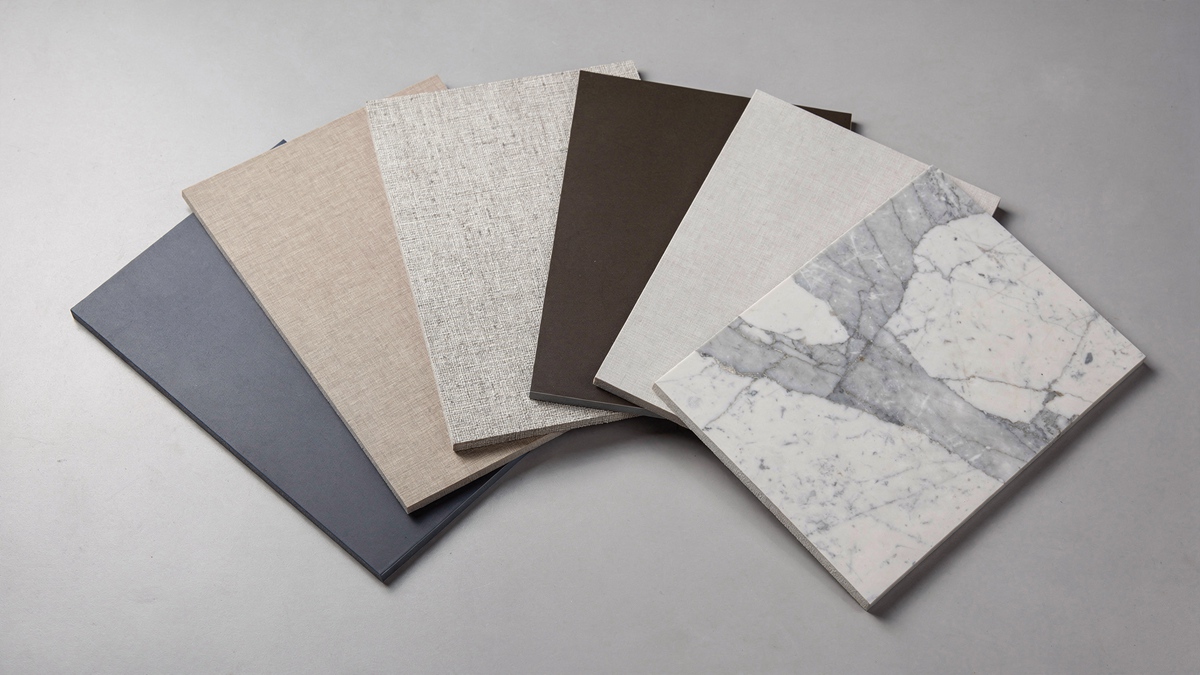
Negotiating a container order requires rigorous attention to detail. Do not rely solely on small A4 color swatches. Swatches are useful for initial design choices, but you must request full-sized pre-production samples from the actual factory line to verify the substrate density and pressing quality.
Write every specification directly into the purchase order. Do not just order "White Melamine Board." Order "18mm MFC, CARB P2, Warm White Stipple Finish, ±0.1mm tolerance."
Finally, address edge banding during the quoting stage. A finished cabinet is only as good as its edges. Require the factory to supply or source exact color-matched and texture-matched PVC or ABS edge banding. Attempting to match a proprietary melamine wood grain with aftermarket edge banding after the boards arrive at your facility is a frustrating, expensive mistake.